In an industry often defined by spectacle and speed, Grace Wales Bonner has built a reputation on something quieter and more deliberate. For over a decade, she has reshaped the language of menswear not through excess, but through intention, crafting collections that are as intellectually rich as they are wearable. As a result, she has become one of the most discussed designers of her generation, with an influence that stretches well beyond the runway.
That influence has only deepened with her recent appointment as creative director of menswear at Hermès, succeeding Véronique Nichanian after nearly four decades. The move signals more than a career milestone. Rather, it reflects a shift in what legacy fashion houses are beginning to value. As Wales Bonner steps into this role while continuing her namesake label, the conversation moves beyond clothing itself—toward authorship, identity, and what luxury is meant to represent today.
A Designer Rooted in Storytelling
From the moment Wales Bonner launched her label after graduating from Central Saint Martins in 2014, her work stood apart. Her early collections did not simply present garments; instead, they made arguments—about Black identity, diaspora, and masculinity. Her Spring 2017 menswear debut, inspired by Haile Selassie, introduced her now-signature blend of historical research and refined tailoring.
From there, her narrative-driven approach continued to evolve. Collections referencing James Baldwin sat alongside more personal works, such as Lovers Rock, which drew on her Jamaican heritage and London’s Caribbean culture. In each instance, Wales Bonner demonstrated that fashion can function as a cultural archive without losing sight of the fact that clothes must ultimately be worn.
The Intersection of Culture and Craft
What makes her work particularly resonant is her ability to merge rigorous research with tangible craft. Her garments, whether sharply tailored suits or sport-inflected separates, carry a sense of purpose. They feel considered rather than merely conceptual.
This balance is perhaps most visible in her ongoing collaboration with Adidas Originals. Since 2020, the partnership has redefined the relationship between luxury fashion and sportswear, helping to spark renewed global interest in silhouettes like the Samba. More importantly, it has shown that Wales Bonner’s intellectual framework does not collapse under commercial pressure—it translates.
Beyond clothing, her work extends into the institutional art world. Through exhibitions at the Serpentine Galleries and the Museum of Modern Art, she has explored themes of sound, movement, and spirituality. In this sense, she operates less like a traditional designer and more like a multidisciplinary artist.
Redefining Visibility in Fashion
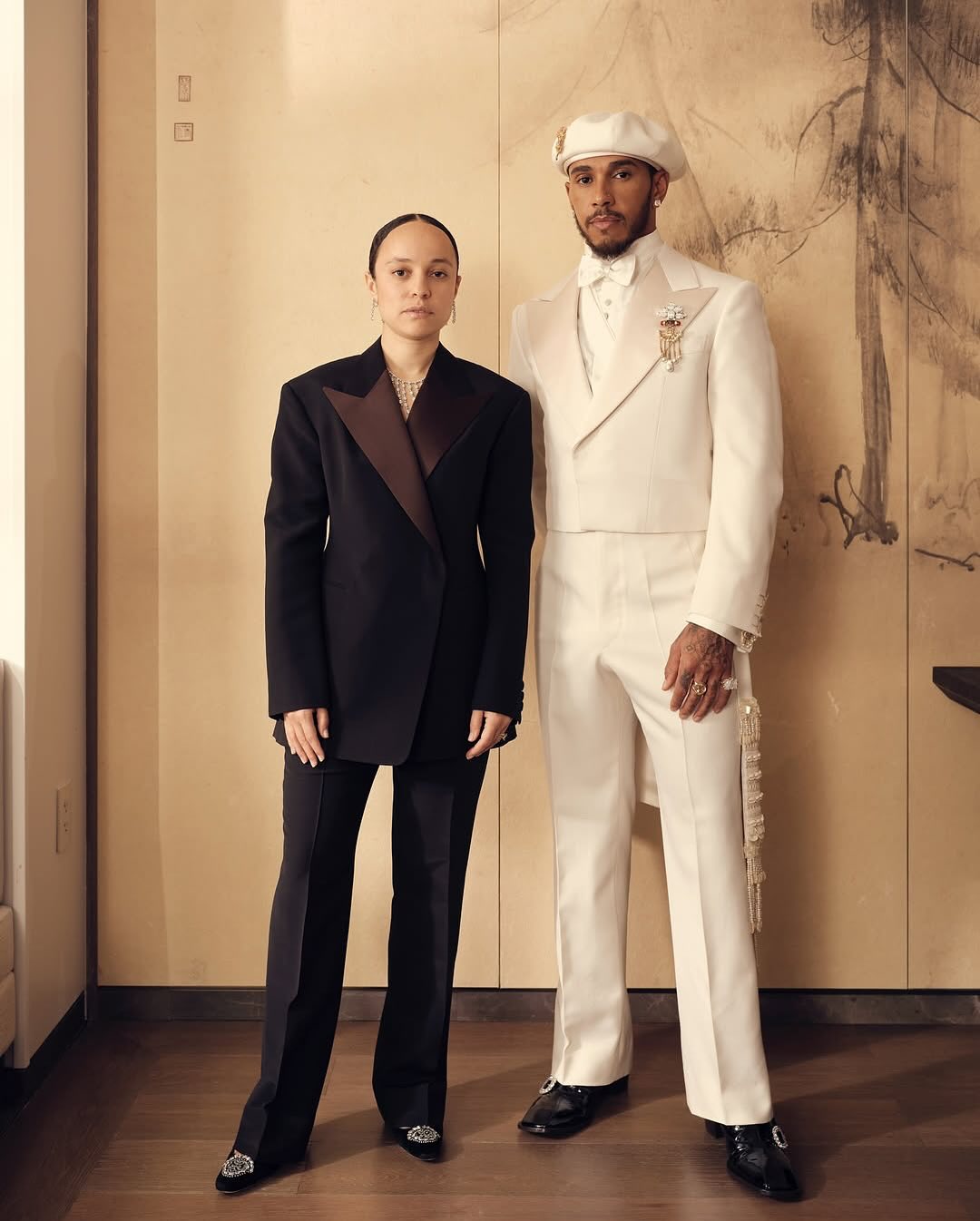
In an era dominated by personal branding and digital noise, Wales Bonner remains notably private. No personal social media, no content strategy—she allows the work to speak. In today’s landscape, this restraint feels almost radical, a reminder that influence does not require constant visibility.
Even so, her cultural reach is unmistakable. From dressing Lewis Hamilton to shaping the visual language of contemporary menswear, she operates as both designer and cultural curator. Her work challenges narrow definitions of Black masculinity, presenting it instead as fluid, elegant, and expansively defined.
A New Chapter at Hermès
Hermès Appoints Grace Wales Bonner as New Menswear Creative Director https://t.co/r2AqkI4bnL
— WWD (@wwd) October 21, 2025
Grace Wales Bonner’s appointment at Hermès is historic: she is the first Black woman to lead menswear at a luxury house of this scale. Yet beyond its symbolic weight, the decision raises important questions about where heritage brands are headed.
Hermès has long been built on tradition, craftsmanship, and restraint. Wales Bonner’s work shares these values, but it also introduces something else: intention. Her approach suggests that the next evolution of luxury will not be defined solely by materials or exclusivity, but by what a collection is actually about.
Her debut collection is expected in 2027. If her past work offers any indication, she is unlikely to discard the house’s legacy. Instead, she will likely expand it, introducing cultural references the house has not previously engaged, while preserving its core identity.
Fashion as Cultural Dialogue
To look at Wales Bonner’s career and see only fashion is to miss the point. Her work exists within a broader dialogue about heritage, representation, and the purpose of creativity itself. Through this lens, fashion becomes a medium for connection, linking past to present, personal narratives to collective histories, and niche references to wider audiences.
In doing so, she has quietly redefined what it means to be a designer today. She is not chasing trends. Instead, she is building a body of work that endures—grounded in research, open to interpretation, and uninterested in over-explaining itself.
The fashion world will continue to evolve around her. However, Wales Bonner’s approach offers something more lasting than a moment: a way of working that treats storytelling, craft, and cultural awareness not as separate ideas, but as one and the same.
Featured image: Koto Bolofo for The Washington Post
—Read Also
The post <em>Designer Spotlight:</em> Inside The World Of Grace Wales Bonner appeared first on Style Rave | The Ultimate Style Guide.