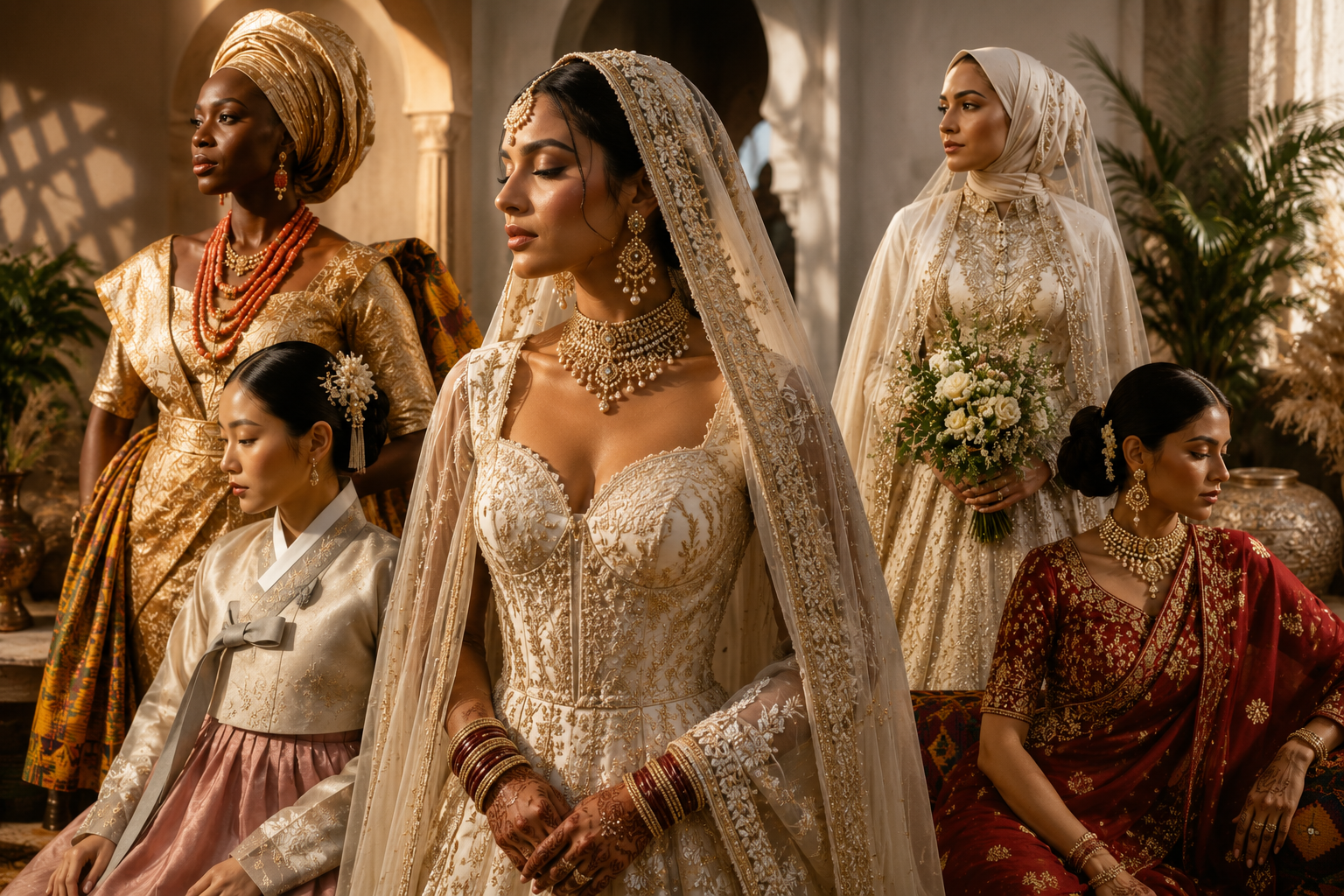
Cross-cultural bridal fashion is no longer a niche aesthetic reserved for multicultural couples trying to compromise between two families. It has become one of the most significant shifts in modern fashion because it reflects something much larger than weddings: the collapse of rigid identity dressing itself. Brides are no longer interested in reducing themselves to a single narrative for the sake of tradition, respectability, or visual simplicity. They want clothing that reflects the full complexity of who they are—geographically, emotionally, culturally, and stylistically. And increasingly, they are demanding bridal fashion that can hold all of it at once.
What makes cross-cultural bridal fashion so compelling right now is that it rejects the old hierarchy of bridal dressing entirely. For decades, Western bridalwear positioned itself as the aspirational default, while non-Western traditions were often treated as “secondary” ceremonies, costume changes, or cultural add-ons orbiting around the white dress. That framework is collapsing.
Cross-cultural bridal fashion refuses the idea that one tradition must dominate another to appear elegant, modern, or luxurious. Instead, it proposes something far more interesting: that the future of bridal fashion belongs to women who can move between worlds without flattening any part of themselves in the process.
Why Cross-Cultural Bridal Fashion Feels So Relevant in 2026
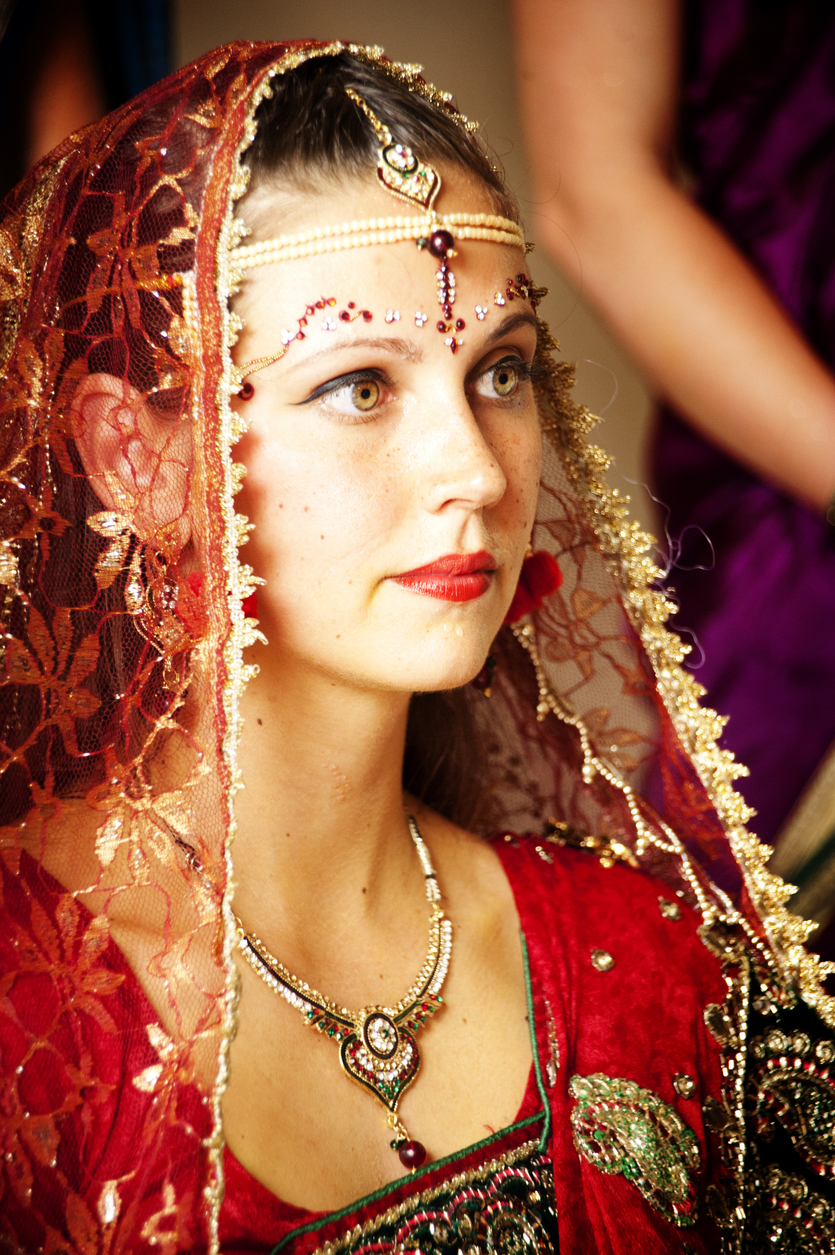
Fusion wedding fashion is not new. Couples have been blending traditions quietly for decades: a sash in a family color, embroidery that nods to heritage, jewelry passed down through generations, or a second outfit representing another side of the family. What feels different now is the confidence.
Cross-cultural bridal fashion in 2026 is being approached with far more intentionality and far less apology. Couples are no longer subtly incorporating culture into otherwise conventional weddings. They are centering it. Publicly. Fashionably. Unapologetically.
And that shift says something important about fashion more broadly. Luxury fashion has spent the last decade obsessing over “global inspiration,” but bridalwear is where cultural storytelling is currently happening with the most honesty and emotional clarity. Weddings force people to ask deeper questions about identity, lineage, migration, family expectations, religion, and modernity. And clothing becomes the visual language through which those negotiations happen.
This is why cross-cultural bridal fashion feels emotionally resonant in a way many trend-driven aesthetics do not. The best looks are not simply beautiful; they are autobiographical.
The Death of the “One Dress” Bridal Fantasy
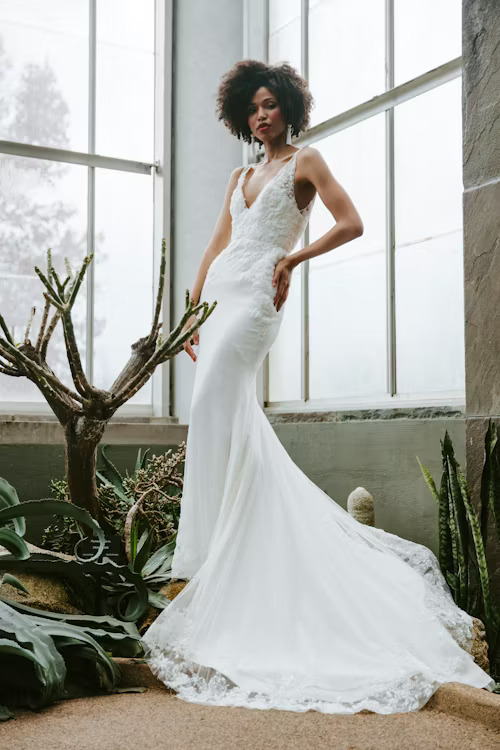
The traditional Western bridal ideal was always built around singularity: one dress, one aisle, one perfect image frozen in time. But globally, that idea has never really reflected how most cultures celebrate marriage.
African, South Asian, Middle Eastern, and East Asian wedding traditions have long embraced wardrobe changes as part of the ceremony itself. Different garments carry different meanings: introduction, blessing, celebration, transition, family honoring, spiritual ritual. Fashion was never separate from the emotional architecture of the wedding. Now, the rest of the world is catching up.
Cross-cultural bridal fashion has accelerated the normalization of multiple bridal looks because modern brides increasingly understand that identity itself is layered. One outfit often cannot hold the entire story. And importantly, the outfit changes are no longer purely practical or ceremonial. They are editorial. Brides are treating weddings like narrative-driven fashion experiences, moving between silhouettes, textiles, and cultural references throughout the day with the precision of a runway collection.
A Nigerian bride wears sculptural lace iro and buba for the traditional ceremony before changing into minimalist satin tailoring for the reception. An Indian bride pairs archival temple jewelry with a contemporary corseted silhouette. A Korean-American bride incorporates hanbok structure into a Western ballgown. A Ghanaian groom lines his tuxedo in kente cloth instead of reserving cultural identity for the “traditional” portion of the wedding.
The point is no longer balance for the sake of diplomacy. The point is authorship.
What Cross-Cultural Bridal Fashion Actually Looks Like
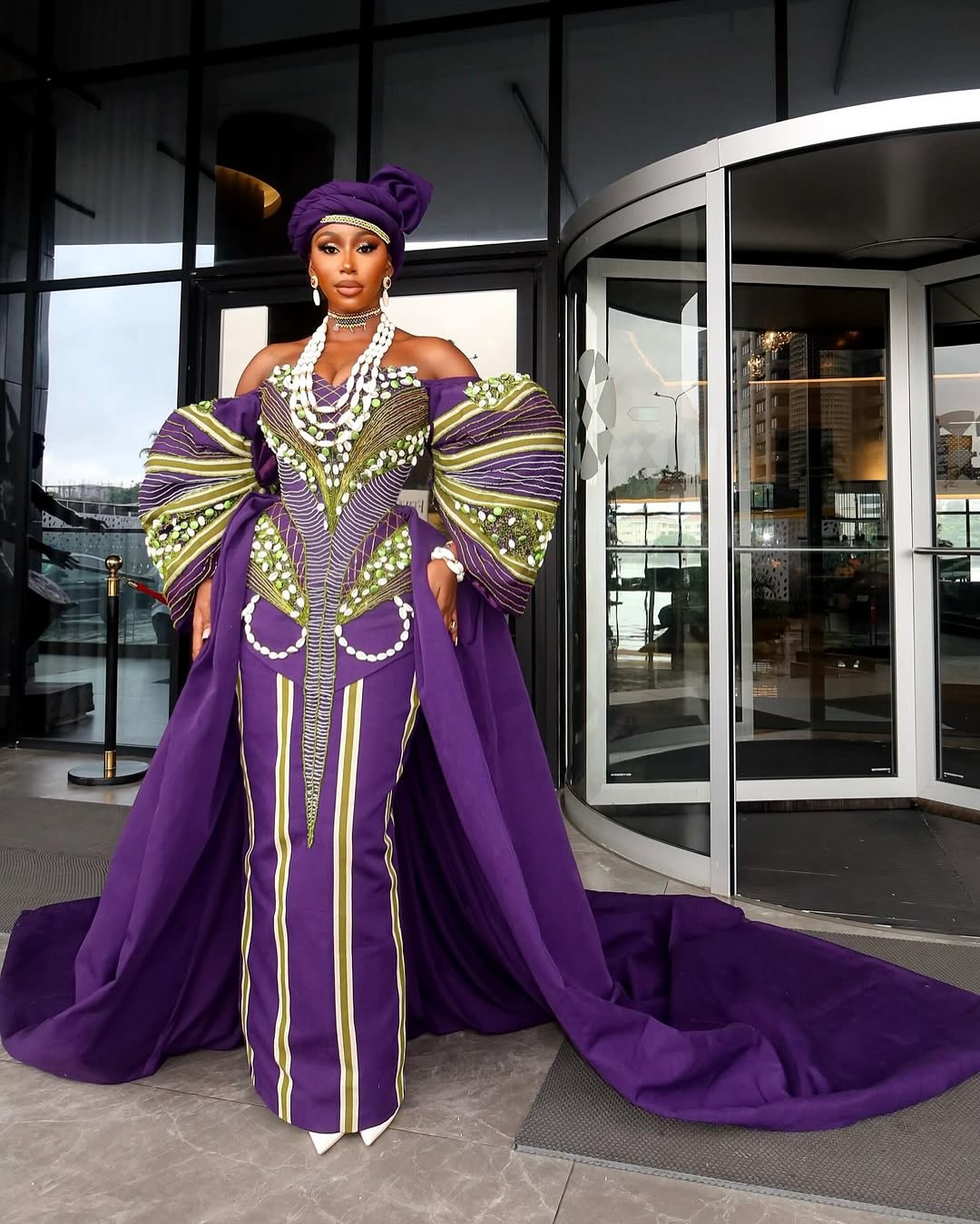
One of the reasons cross-cultural bridal fashion feels so creatively exciting is because it resists becoming a single aesthetic category. It is not one silhouette. Not one fabric. Not one region. Not one formula. Instead, it exists through hybridization.
Saree gowns. Lehenga sarees. Tailored suits with draped elements. Corseted gowns cut from aso-oke. Adire incorporated into bridal separates. Ankara reconstructed into cathedral-length trains. Veils embroidered with Arabic calligraphy. Chinese silk techniques meeting contemporary couture construction.
The most successful cross-cultural bridal fashion does not simply “mix” traditions randomly. It understands proportion, symbolism, restraint, and context. It understands when to let a textile speak loudly and when to allow tailoring to carry the narrative instead. That distinction matters because there is a fine line between fusion and costume.
The strongest cross-cultural bridal looks feel deeply lived-in rather than performative. They communicate that the bride understands the cultural language she is speaking through clothing, rather than merely borrowing aesthetics because they photograph well online.
Fabric Is the Real Language of Cross-Cultural Bridal Fashion
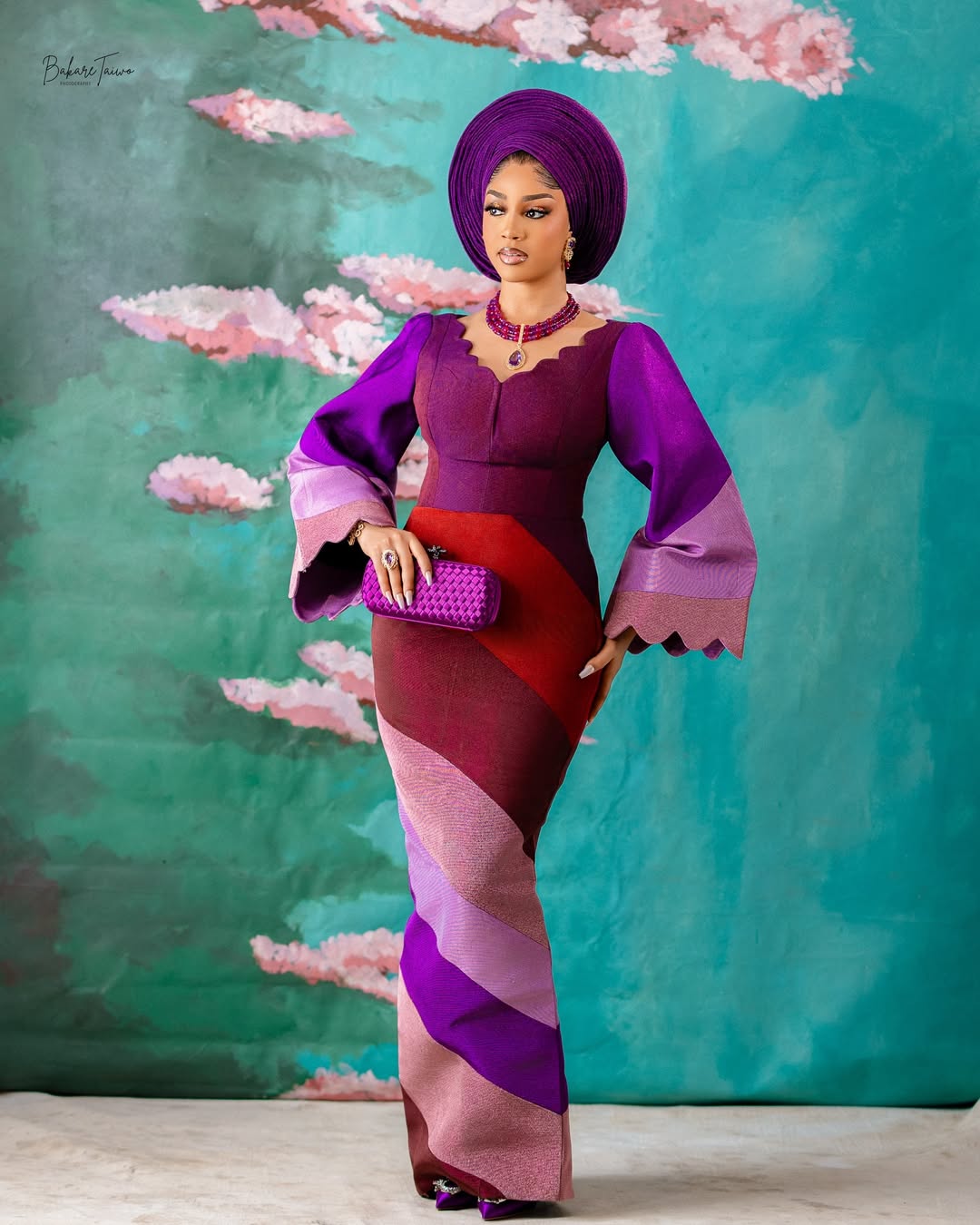
Cross-cultural bridal fashion often lives or dies through fabric choice because textiles carry memory in ways silhouettes sometimes cannot. Silk aso-oke woven in Iseyin. Kente cloth handwoven in Bonwire. Banarasi silk from Varanasi. Adire from Abeokuta. French lace reworked through Nigerian tailoring traditions. Velvet, raffia, coral beadwork, gold-thread embroidery. These are not decorative embellishments attached to otherwise generic bridalwear. They are cultural archives.
One of the most interesting developments in cross-cultural bridal fashion is the growing refusal to treat non-Western textiles as “accent details.” Increasingly, the textile itself becomes the central design statement rather than the supporting act. And frankly, the bridal industry needed this shift.
For years, mainstream bridalwear often leaned toward visual sameness: endless variations of the same strapless gown filtered through trend cycles. Cross-cultural bridal fashion reintroduces texture, symbolism, craftsmanship, and regional specificity into bridalwear at a moment when many brides are craving emotional connection over generic luxury.
The Quiet Politics of Bridal Fashion
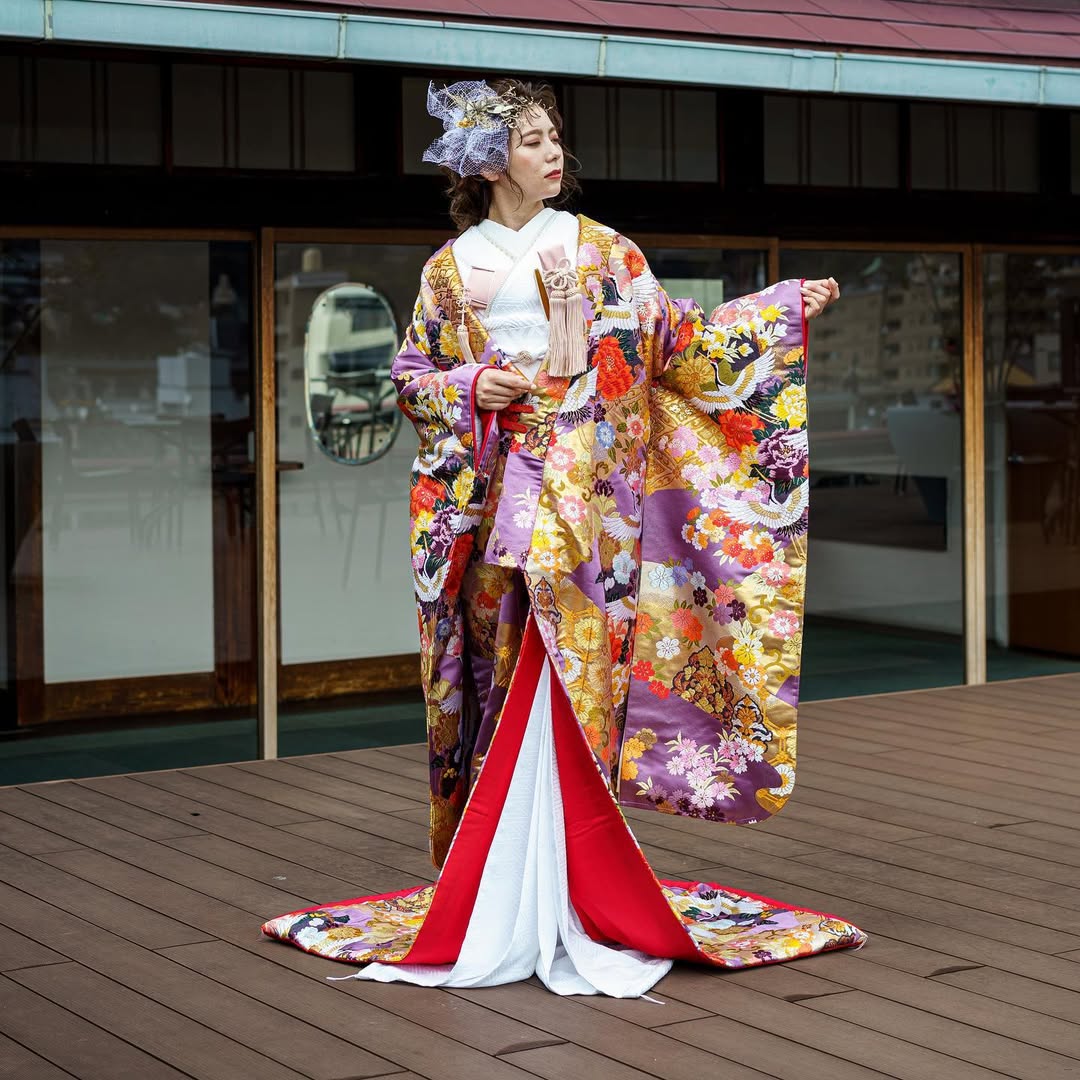
There is also a political dimension to cross-cultural bridal fashion that people rarely discuss openly. For many immigrant families, bicultural couples, and diasporic communities, weddings are one of the few spaces where cultural identity becomes publicly negotiated in real time. Clothing carries enormous emotional weight within that negotiation. Which traditions get prioritized? Which languages are spoken? Which fabrics are considered “formal” enough? Which side of the family gets visually centered?
Cross-cultural bridal fashion can sometimes become a way of resolving those tensions without forcing one identity to disappear for the comfort of another. That is partly why these looks resonate so strongly online. People are not just reacting to beauty. They are reacting to recognition. Fashion is rarely just fashion at weddings. It becomes diplomacy, memory, inheritance, aspiration, and self-definition simultaneously.
How to Approach Cross-Cultural Bridal Fashion Without Losing Yourself
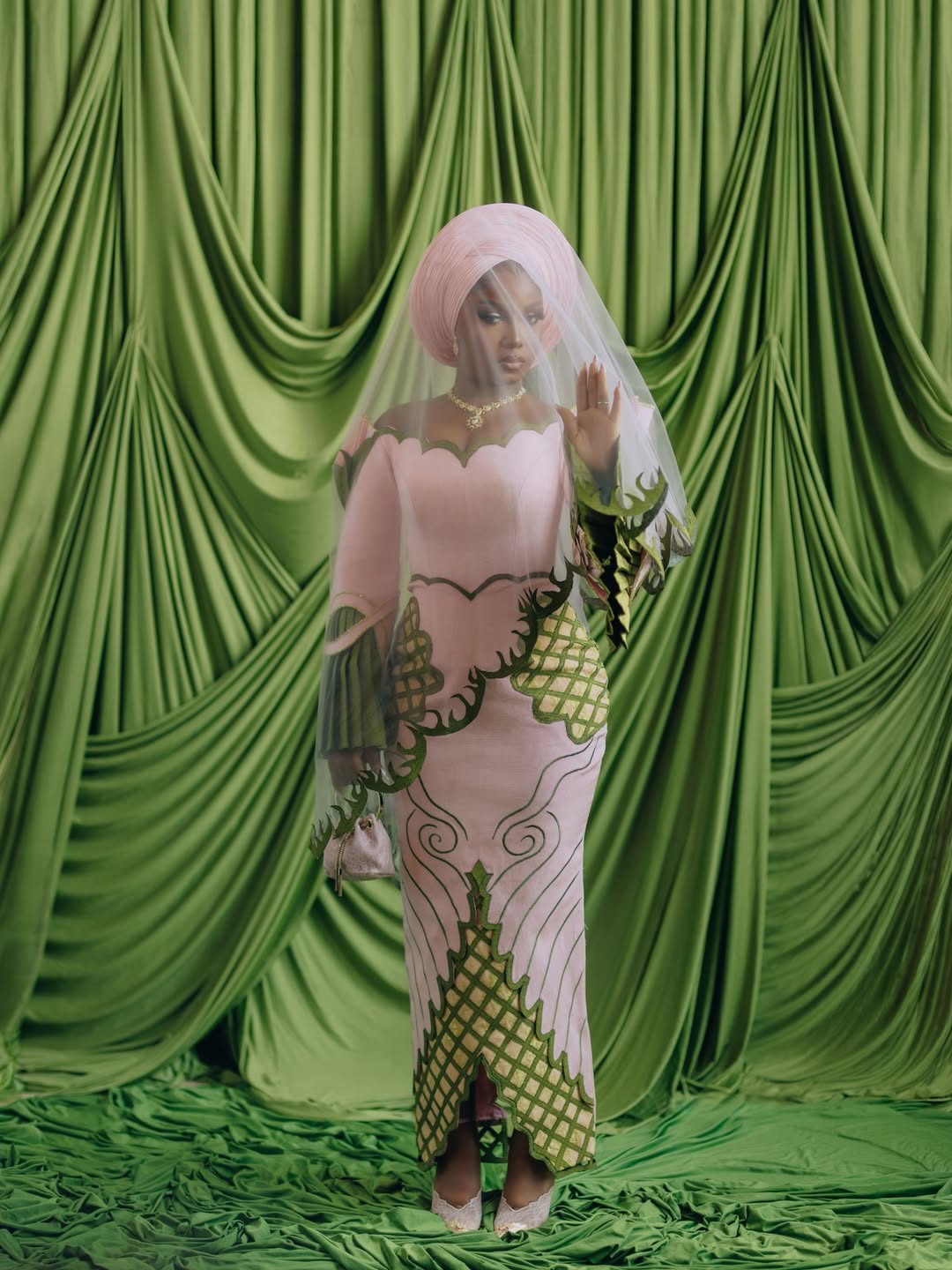
The strongest cross-cultural bridal looks usually follow the same principles.
Start with the story, not the trend
The best bridal styling begins with personal history, not trend forecasting. Which traditions genuinely matter to you? Which garments feel emotionally connected to your upbringing, family, or sense of self? Build from there outward. The most powerful cross-cultural bridal fashion always feels emotionally anchored before it feels visually impressive.
Find a designer who speaks both languages
Not every designer understands how to handle cultural fusion respectfully or intelligently. Ideally, work with designers who understand the construction, symbolism, and history behind the references being incorporated. In some cases, collaborations between multiple designers produce the strongest results because they allow different traditions to remain intact while still creating something new.
Give each cultural element its full moment
The mistake in cross-cultural bridal fashion is rarely “too much culture.” The mistake is usually lack of editing. When every detail competes equally for attention, the story gets lost. The strongest looks know when to simplify, when to exaggerate, and when to allow one cultural element to fully dominate a silhouette for maximum impact. Restraint is what makes fusion feel luxurious rather than chaotic.
Cross-Cultural Bridal Fashion Is Not a Trend, It Is Identity in Motion
The reason cross-cultural bridal fashion matters so much right now is that it reflects the direction fashion itself is moving toward: specificity over universality, narrative over convention, identity over tradition for tradition’s sake. Modern brides no longer want weddings that could belong to anyone. They want weddings that could only belong to them.
And that is exactly what cross-cultural bridal fashion offers at its best. Not just visual beauty, but emotional precision. A wedding wardrobe that communicates, without explanation, who someone is, where they come from, and how they choose to exist in the world. Not diluted. Not simplified. Entirely intact.
Featured image: StyleRave Creative Studio / AI-generated
The post Cross-cultural Bridal Fashion Is The Most Important Bridal Movement Right Now appeared first on Style Rave | The Ultimate Style Guide.