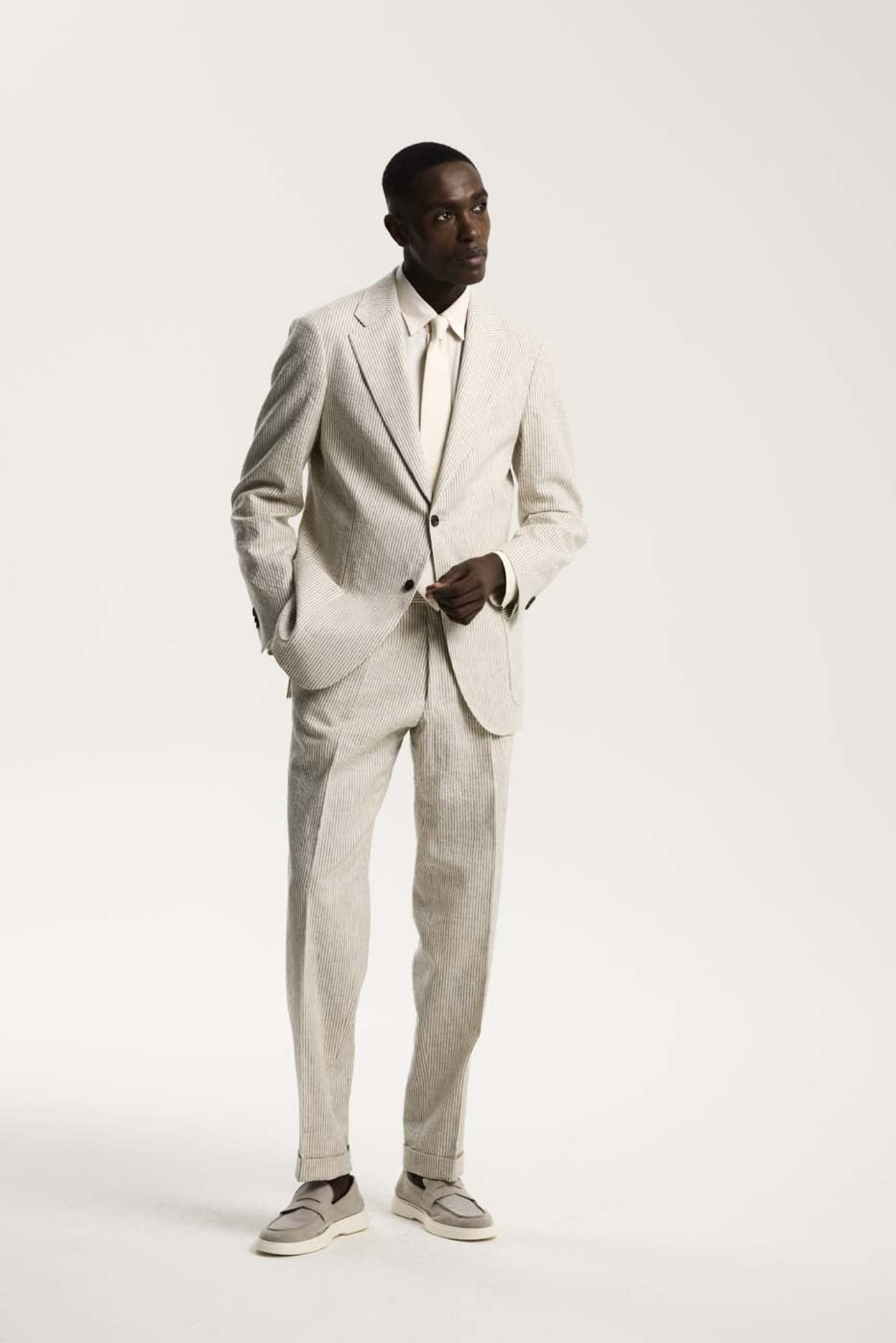

As soon as warm weather starts creeping in, wardrobes everywhere shift into the same familiar rotation: linen shirts, linen trousers, linen everything. But lately, a quiet counter-movement has been forming in menswear and casual tailoring circles. The conversation is shifting from linen dominance to something a bit more structured, a bit more interesting. And at the center of it is a fabric debate that keeps appearing in trend forecasts: linen out, seersucker in.
The rise of seersucker as a warm-weather alternative is not just hype; it is a genuine rethink of how we dress when temperatures climb. Still, this is not simply a straight swap or a trend dictated entirely by fashion cycles. It feels more like a slow correction. People are starting to question whether “effortless” has become code for “sloppy,” especially when linen wrinkles within minutes of being worn. That is where seersucker re-enters the conversation, not as a novelty, but as a practical solution with personality.
And while linen still holds its place in summer wardrobes, the idea that it should dominate warm-weather dressing is beginning to feel outdated. The modern wearer wants breathability, yes, but also structure, texture, and a sense of intention behind the outfit.
Shop editor’s choice
Linen Fatigue Is Real
Let’s be honest: linen had a long, comfortable run. It became the default answer to summer dressing because it is breathable, lightweight, and easy to throw on. But the downsides are equally familiar: constant wrinkling, a tendency to lose shape, and an overall softness that can read as unintentionally disheveled rather than relaxed and refined.
This is where the seersucker conversation becomes relevant again. The argument is not that linen is bad; it is that it is no longer the only answer. Once you start paying attention, you notice more designers and stylists quietly reaching for alternatives that feel just as breathable but far more structured.
In that context, seersucker begins to stand out as something more purposeful. It does not try to mimic linen’s softness. Instead, it offers a built-in texture that handles heat differently. And for people tired of constant ironing or accepting wrinkles as “part of the look,” that difference matters.
Shop editor’s picks
Why Seersucker Works Better in Heat
At its core, seersucker is a lightweight cotton fabric woven with alternating smooth and puckered stripes. That texture is functional. The puckering lifts parts of the fabric away from the skin, creating micro air pockets that improve airflow. In humid climates, that detail makes a noticeable difference.
This is why seersucker has such a long association with Southern tailoring and warm-weather suiting. It performs in heat rather than merely surviving it. You do not just wear it; you feel the difference the moment temperatures rise.
Compared to linen, seersucker also has a subtle but important advantage: consistency. It holds its structure throughout the day. While linen tends to collapse into wrinkles, seersucker maintains its intended texture. That built-in finish means you can wear it from morning to evening without feeling as though your outfit has deteriorated.
Interestingly, this is also where the phrase “linen out, seersucker in” becomes more than a catchy forecast. It reflects a broader shift toward fabrics that work harder visually and functionally without requiring extra maintenance.
Shop editor’s choice
From Tradition to Modern Wardrobes
Historically, seersucker was not always considered versatile. It was often associated with bold stripes, old-school tailoring, or preppy summer uniforms. But that perception is changing quickly. Designers are reworking it in muted tones, subtle checks, and monochrome palettes that feel far more adaptable to modern wardrobes.
Today’s seersucker is not just for summer weddings or vacation dressing. It is showing up in overshirts, relaxed tailoring, short-sleeve button-downs, and lightweight jackets. That evolution has made it far more wearable across different style identities, from minimalists to vintage-inspired dressers.
In this newer context, the idea of seersucker replacing linen begins to make more sense. It is not about nostalgia; it is about utility meeting aesthetics in a more balanced way.
Shop editor’s favorites
How to Wear It Without Overthinking
One of the biggest advantages of seersucker is that it does a lot of visual work for you. The texture adds depth even to simple silhouettes, which is a huge benefit in summer when layering options are limited.
A plain seersucker shirt, for example, does not need much styling support. It pairs easily with chinos, denim, or tailored shorts without feeling flat. Meanwhile, a full seersucker suit offers a rare combination: formal structure with built-in breathability. That balance is something linen suiting often struggles to achieve without appearing overly relaxed.
There is also a quiet confidence in wearing seersucker. It signals intention. You are not just defaulting to the easiest summer fabric; you are choosing one that actually responds to heat in a smarter way.
And yes, seersucker still has personality. It does not pretend to be invisible or ultra-minimal. But that is part of its charm. It acknowledges that summer clothing can be functional without being boring.
Shop editor’s selection
Linen Out, Seersucker In?
So, is linen really on its way out? Not entirely. But its monopoly on warm-weather dressing is definitely weakening. The rise of seersucker highlights a shift in priorities: comfort is still essential, but so are structure, longevity, and ease of wear.
The increasing presence of this fabric in trend conversations is not accidental. It reflects a genuine rebalancing in how we think about summer fabrics. People want clothes that perform, not just clothes that look relaxed for a few minutes before wrinkling into something else entirely.
In the end, the smartest wardrobes probably will not abandon linen completely. But they will diversify. And if current trend forecasts are any indication, seersucker will play a much bigger role in that mix than it once did.
Linen out, seersucker in, but more importantly, smarter summer dressing overall.
Featured image: Costume Cafe
—Read Also
The post <em>Linen Out, Seersucker In?</em> Why Menswear Is Rethinking Summer Fabrics appeared first on Style Rave | The Ultimate Style Guide.