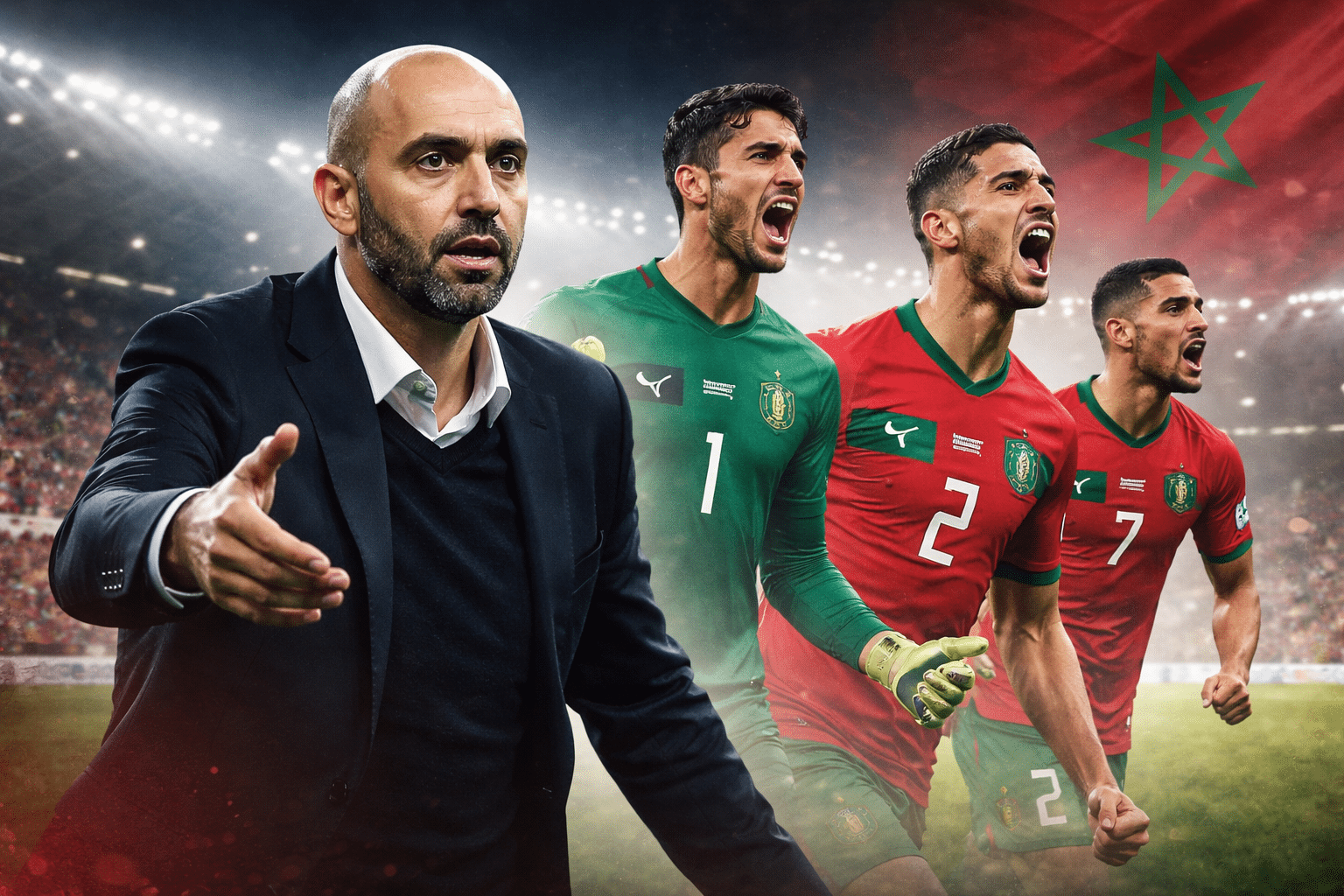

African football is no stranger to sudden shifts, but Morocco’s latest decision has still caught many observers off guard. Walid Regragui — the architect of the Atlas Lions’ historic run to the semi-finals of the 2022 FIFA World Cup — has stepped away from the national team just as preparations for the 2026 tournament enter their most critical phase.
For a country that redefined what African football could look like on the world stage, this is a team that top betting sites and analysts worldwide are watching more closely than ever.
The Legacy Regragui Leaves Behind
Morocco’s 2022 World Cup campaign was genuinely historic. The Atlas Lions became the first African side to reach a semi-final, eliminating Spain and Portugal along the way with a brand of football that was tactically coherent, physically relentless, and psychologically resilient. Regragui inherited a talented squad and gave it an identity.
His system — built on a compact defensive block, aggressive pressing triggers, and devastating transitions — was not simply effective. It was replicable and consistent, which is rarer and more significant. Morocco didn’t stumble into the semi-finals. They earned it through structure.
His final chapter was complicated, however. Morocco reached theAFCON final but fell short of the title, a result that reignited debate over whether the team’s ceiling had been reached under his management or if the project still had further to go. His departure, in that context, feels less like a crisis and more like the natural end of a cycle.
Morocco’s profile has grown to the point where its matches now anchor the commercial calendar for major platforms across the region. The Atlas Lions are consistently among the most-backed African sides ahead of tournament windows — a pattern already visible in how platforms like 1xBet are positioning their offers around the 2026 cycle, with the 1xBet promo code MBSBET drawing significant search volume from Moroccan supporters in the lead-up to qualifiers.
Mohamed Ouahbi: Continuity or Reset?
The appointment of Mohamed Ouahbi is the federation’s answer to that question — and it suggests they believe in continuity more than reinvention.
Ouahbi is not a headline name internationally, but his work within Morocco’s football ecosystem is well-regarded. He has spent significant time with younger squads, focusing on structured development and tactical discipline from an early age. The federation’s logic seems to be that he understands the pipeline feeding into the national team better than almost anyone else.
That matters enormously right now. Morocco’s senior squad is entering its prime years, but a second generation of talent is already pushing for inclusion. Managing that transition without disrupting the team’s competitive core is the most delicate task any coach in his position faces. That pressure is not lost on the wider regional market either. Morocco’s standing as Africa’s premier football nation has made it a focal point for sports engagement across the MENA region — and platforms like Best Arab Casinos have documented a measurable rise in pre-match interest around Atlas Lions fixtures that began with Qatar 2022 and has not slowed since.
The risk is clear: Ouahbi has less experience managing the political and psychological weight of a senior World Cup campaign. The margin for error over the next eighteen months is essentially zero.
What the 2026 World Cup Demands
Morocco enters the final qualification and preparation phase as one of Africa’s undisputed frontrunners, but the 2026 tournament introduces a new variable: the expanded 48-team format means more matches, greater squad depth requirements, and a longer path to the final.
Several tactical questions will define Ouahbi’s early tenure:
- Defensive identity. Regragui’s compact structure was the foundation of everything. Whether Ouahbi maintains it, adjusts it, or rebuilds it will tell observers almost everything they need to know about his approach.
- Squad integration. Players like Bilal El Khannous and others from the emerging generation are ready for greater responsibility. How quickly Ouahbi trusts them in high-stakes environments will determine Morocco’s ceiling.
- Psychological recovery. The AFCON final defeat matters more than the scoreline suggests. Losing a final leaves a mark. How the senior players process that experience — and whether new leadership accelerates or delays that process — is an underappreciated variable heading into 2026.
A New Chapter, Not a Clean Slate
Coaching changes before a World Cup carry inherent risk. History is littered with examples of teams that peaked under one manager and faltered under a replacement who couldn’t replicate the culture that produced the success.
Morocco’s advantage is that its infrastructure is stronger than ever. The federation has invested seriously in player development. The talent pool is deeper. And critically, the squad has experienced winning at the highest level — that cannot be coached into a team; it has to be lived.
Regragui leaves behind more than a run of results. He leaves behind a standard. That weight is already visible in how the market is reading this transition. Searches for World Cup 2026 promo codes linked to Moroccan fixtures have tracked steadily upward since the coaching announcement — suggesting that neither analysts nor supporters are treating this as a step backward.
Ouahbi now inherits something more complex than a squad. He inherits expectations—the particular weight that comes with being a team the world watched and believed in. Meeting those expectations on North American soil, while building the foundation for the 2030 World Cup, which Morocco will co-host, is the challenge of his career. In front of a massive North African diaspora, he must prove that 2022 was the beginning of an era, not a one-off miracle.
Whether he rises to it will be one of the more compelling storylines African football produces between now and the summer of 2026.
The post Morocco at a Turning Point: What Regragui’s Departure Means Before World Cup 2026 first appeared on Africa Top Sports.